200 Scoreboards in One Week: The Soccer Tournament's $1M Event
Fans at a $1M 7v7 tournament couldn't see the score. TST put KeepTheScore on 5×10 ft LED boards beside seven pitches, target score and all. Here's how.
Article Contents
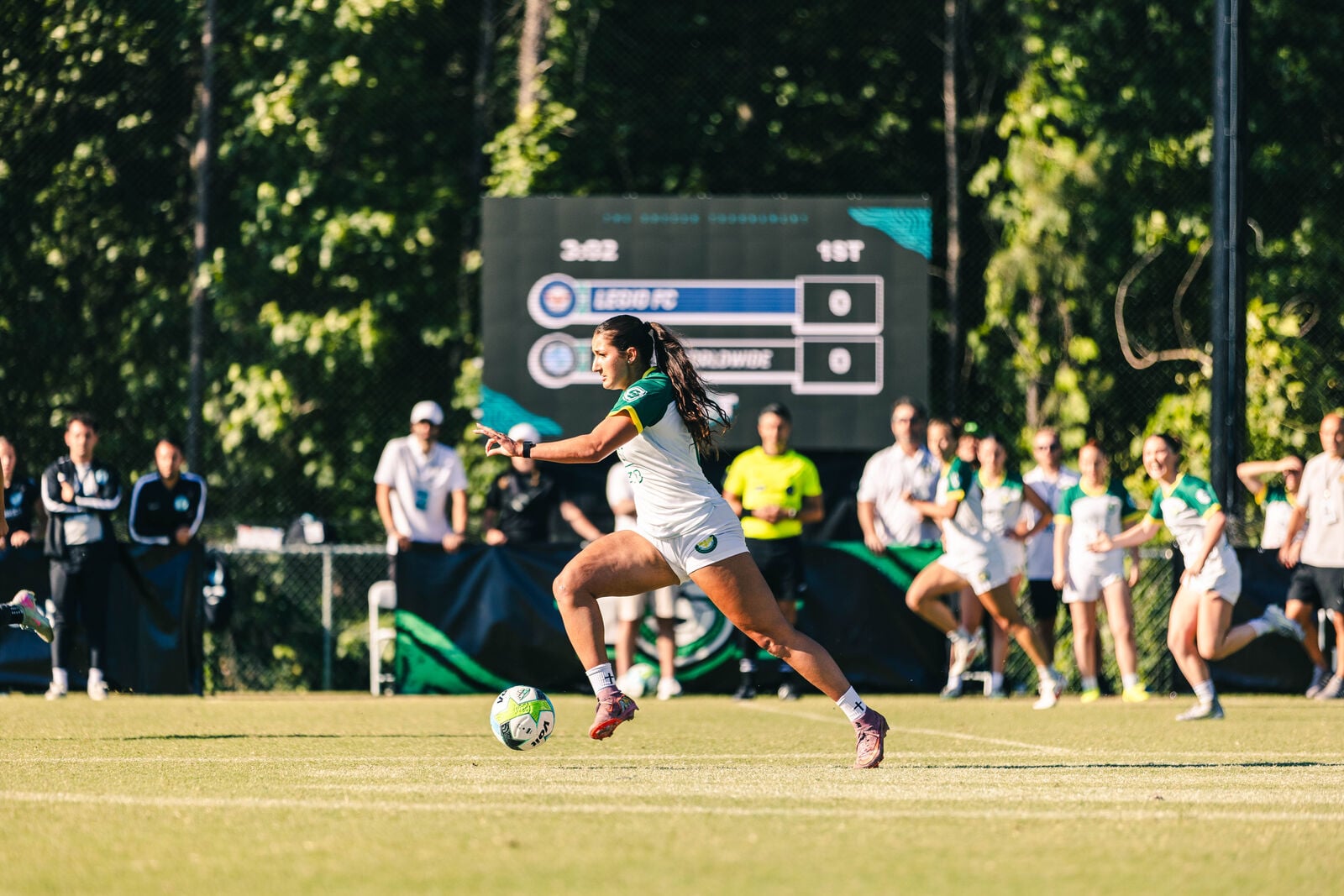
Seven pitches, 159 matches in six days, and a $1 million winner-take-all prize in each of three brackets. The Soccer Tournament (TST) is a 7v7 event played every summer at WakeMed Soccer Park in Cary, North Carolina. Its sister event, The Basketball Tournament (TBT), plays for $2 million. Both belong to The Tournament, and both end their games with a rule no ordinary scoreboard can show.
Perry Becker is Events Coordinator at The Tournament and the person in charge of its scoreboards. For TST 2026 his brief was simple to state and harder to deliver: everyone at the ground should be able to see the score.
| TST 2026 by the numbers | |
|---|---|
| Matches | 159, across seven pitches in six days |
| Fans on site | Nearly 58,000 |
| Athletes | More than 2,000 |
| Broadcast | About 30 games on NBC platforms, four on the main NBC network |
| YouTube | Over 1 million unique viewers |
| Scoreboards created | Around 200, in one week |
Fans Who Paid for Tickets Couldn't See the Score
TST plays sevens, so two of its pitches fit inside one full-size field. Only the main stadium has a fixed scoreboard, and that one is fed straight from the production truck. Everywhere else, nothing. After the 2025 event, the fan feedback was blunt.
"You need scoreboards on every field. I have no idea what's going on. I don't know what the score is. I'll show up to the field and I don't know what's happening."
The broadcast was never the problem. NBC and TST's YouTube channel carried games with a scorebug added by the production crew, and Perry is happy to leave that side to them. He calls the gap "the in-person issue", and he's direct about why it counts. The fans in the stands are the ones paying for tickets, and tickets are a large share of the revenue. Paying to be there and still not knowing the score was, in his words, "a big issue we needed to address."
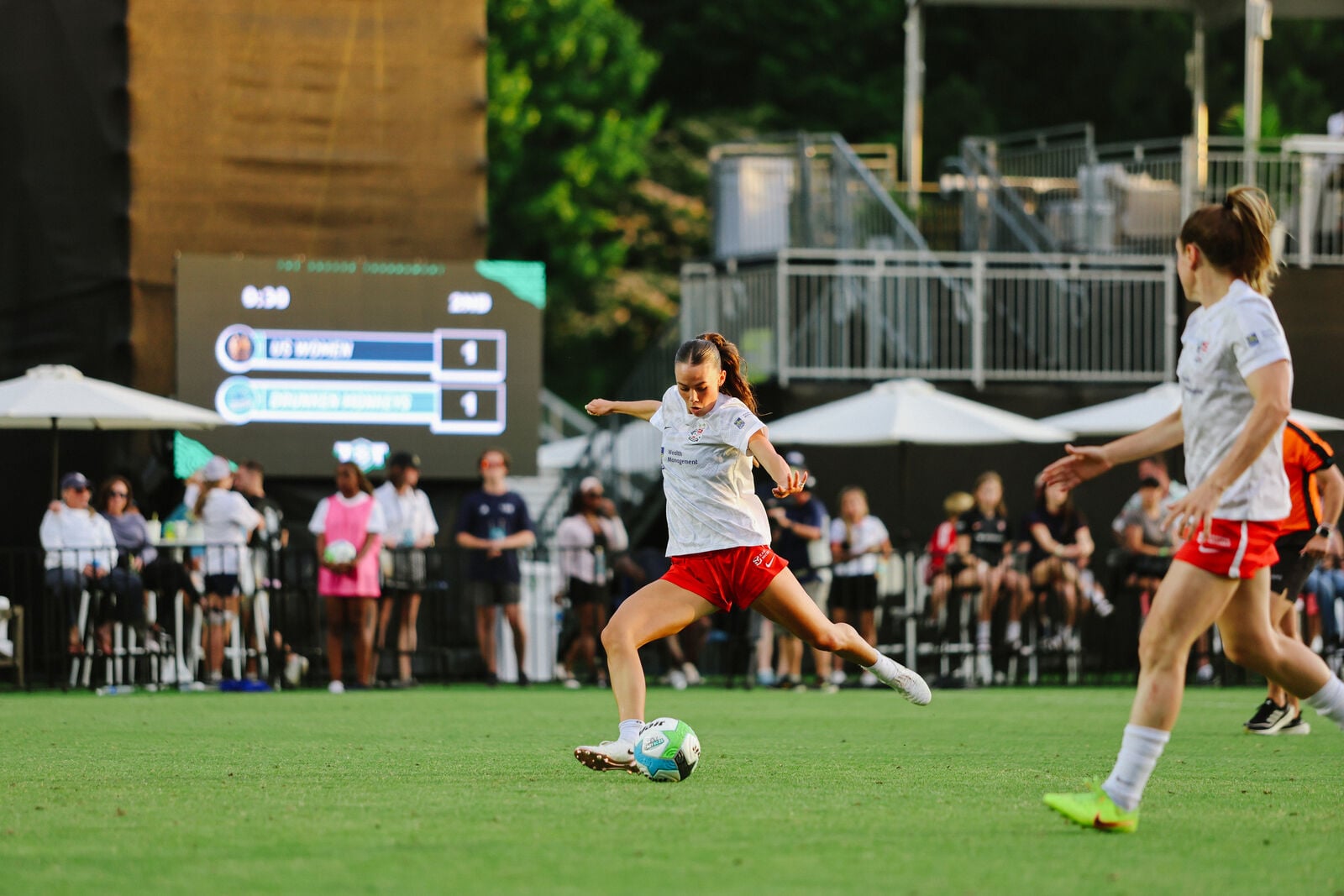 Second half, 1–1, and everyone in the stands can see it.
The plan for 2026: a 5 ft by 10 ft LED board next to every pitch, and scoreboard software that runs on an LED wall to drive it.
Choosing Software for 150 Games a Week
Perry judged every option on four things: how many boards it supports, what the board looks like, what it costs, and whether it actually works.
Board count was the hard constraint. TST runs more than 150 games in a week, and every fixture needed its own board.
"They were probably 10 times more expensive and had one little other thing that was like, 'I'm not paying that much more to get something slightly different.' Something minute that we didn't even need, frankly."
Unlimited scoreboards on the Pro plan settled it, bought as a one-month pass to cover the event.
The Rule No Scoreboard Could Show
TST doesn't do draws. When regulation time ends, the whistle goes, one goal is added to the leading team's score, and that number becomes the target. Play carries on without a clock until somebody reaches it, so every match ends on a game-winning goal. TST calls it Target Score Time. TBT does the same thing in basketball with the Elam Ending: the clock goes off in the fourth quarter and the target is the leading score plus eight.
No scoreboard product displays a target score, and Perry didn't expect one to.
"No one really offered a great solution for that, which is totally understandable. It's so unique, it's so niche."
What made it work was KeepTheScore's Bring Your Own Scorebug feature. TST's graphic designer drew the whole board as a PNG — team names and "TARGET SCORE" drawn straight into the frame — and uploaded it as the background of a soccer scoreboard. The live clock and scores sit on top, dragged into position once. One graphic per fixture is where the 200 boards came from. Perry reckons a bespoke build would have cost thousands of dollars. This cost a month's pass.
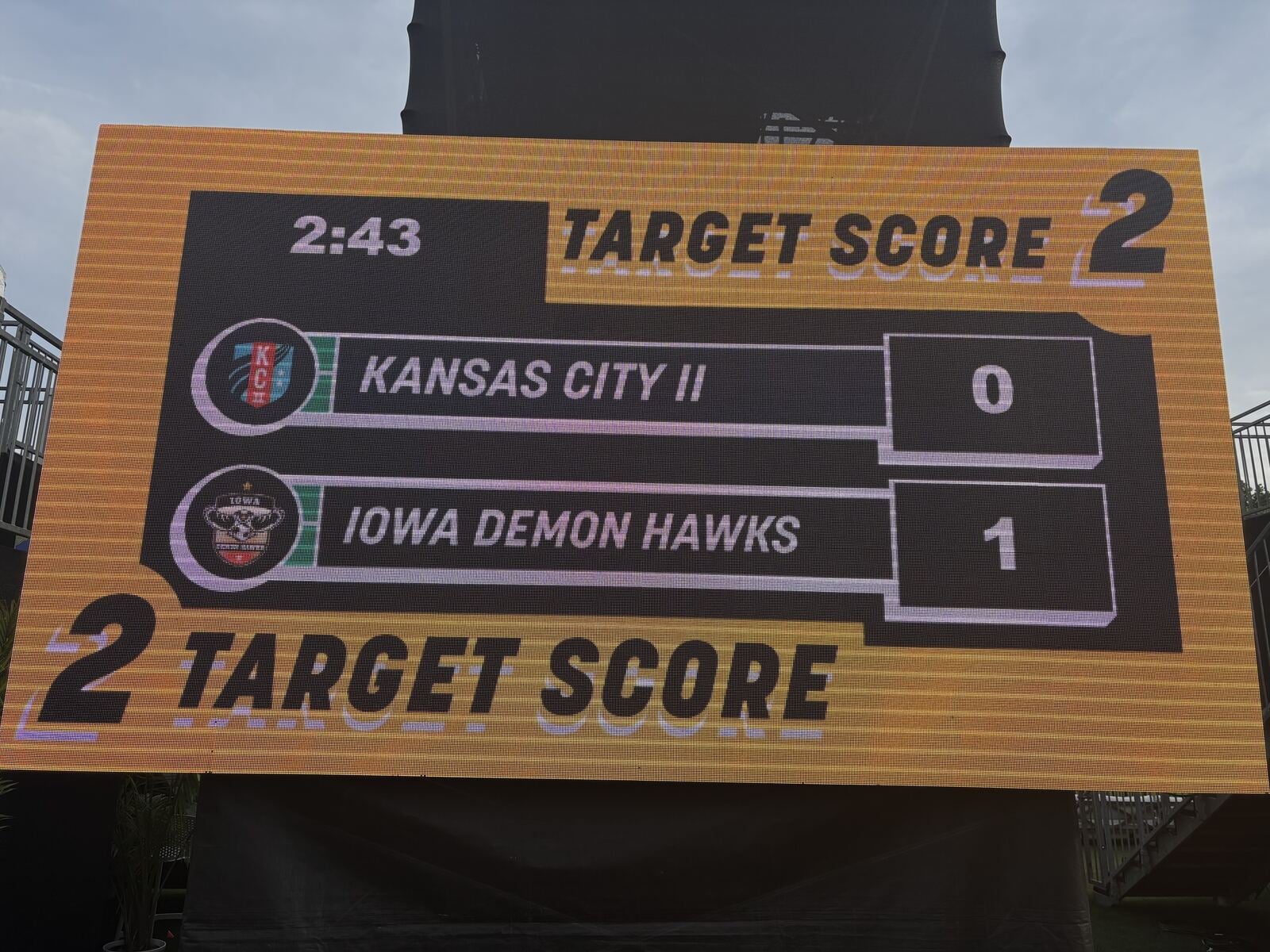 Target Score Time on the board. The orange frame is TST's own graphic; the clock, names and scores are live from KeepTheScore.
We'll admit we built this feature for streamers who wanted their own scorebug design inside OBS. We hadn't pictured it on a 5 ft LED wall beside a pitch. Having seen Perry's boards, we think the venue is the better use: a stream can always add its own graphics, but a physical board with the wrong rules on it is stuck with them.
The LED Wall Is the Hard Part, Not the Software
On site the whole rig is two browser windows: the board itself, full-screen on the LED wall, and the control panel on a tablet or laptop by the pitch. No console, no dedicated hardware, nothing to freight in.
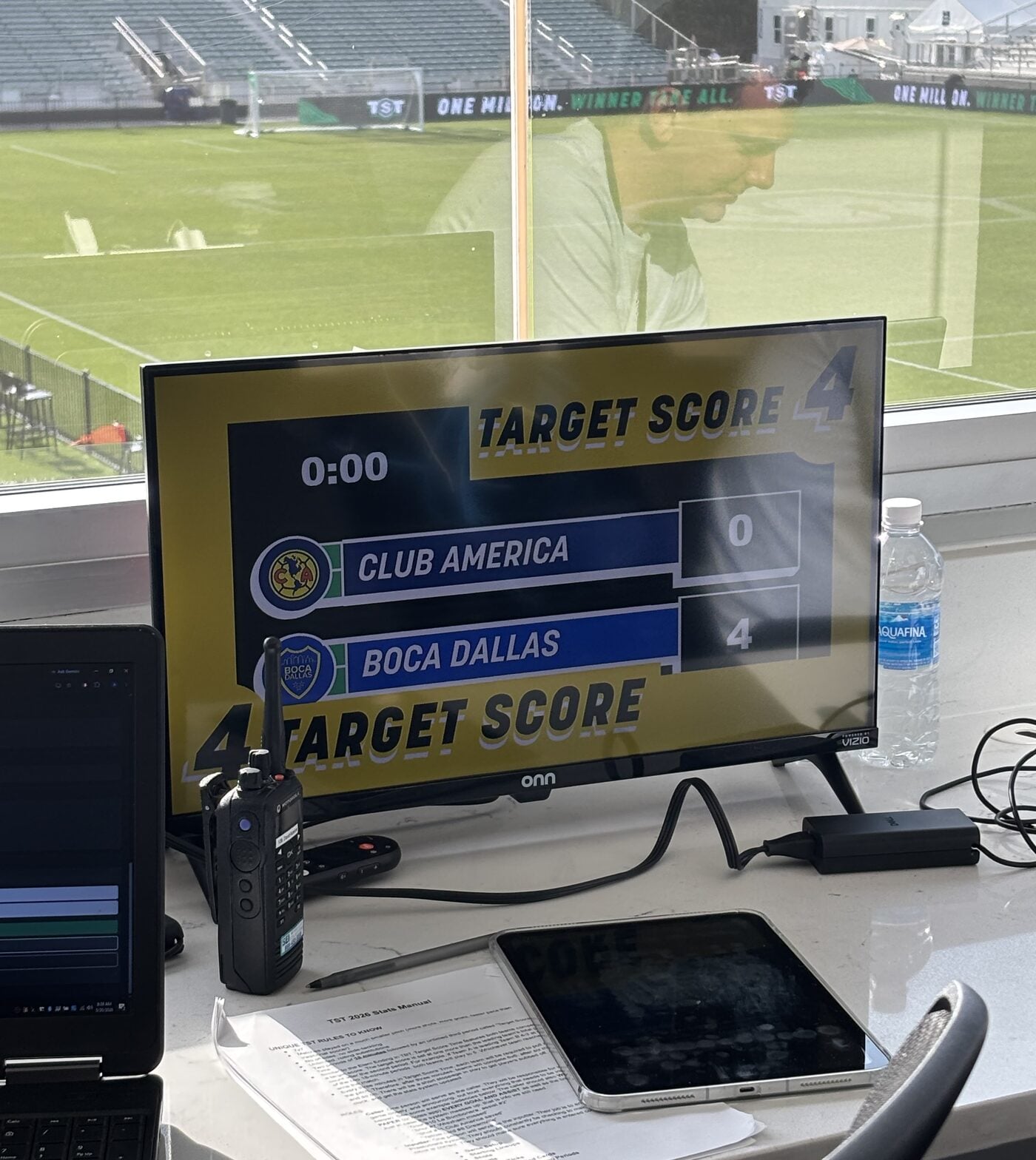 Running a board from the booth: the display on a monitor, the control panel on a tablet, radio within reach.
If you're going the LED route, budget your worry for the physical fit rather than the software. TST's supplier was new to them, and getting the graphic to fill the board exactly, with no gap at the ends, took a few rounds on pixel sizes.
"Our tournament is six days long, and it took us one day to figure it all out. So we got it, and in the end it looked perfect."
From a Pitch in Cary to a Tent in Las Vegas
Two months later the same approach went to basketball. TBT 2026 split its 16 teams into an alumni bracket on college campuses, where the gyms have their own scoreboards, and a non-alumni bracket at a resort in Las Vegas. There, the venue was an empty tent. The Tournament brought in the court, the sound, the lighting, the cameras, and a scoreboard.
The first instinct was a conventional hardware basketball scoreboard. Then the TST setup changed the calculation.
"We were like, 'Well, we can bring in a 5x10 LED board and use KeepTheScore and do that.' We went with that option knowing that we could trust you guys and your system to put up a great display."
Perry never went to Las Vegas. He and his colleague Alex settled on a template for the basketball scoreboard in under an hour, and Alex's team built the rest on site, logos and all, and ran them from the scorer's table. Fifteen games, run by people who were handed a link, not trained on a console.
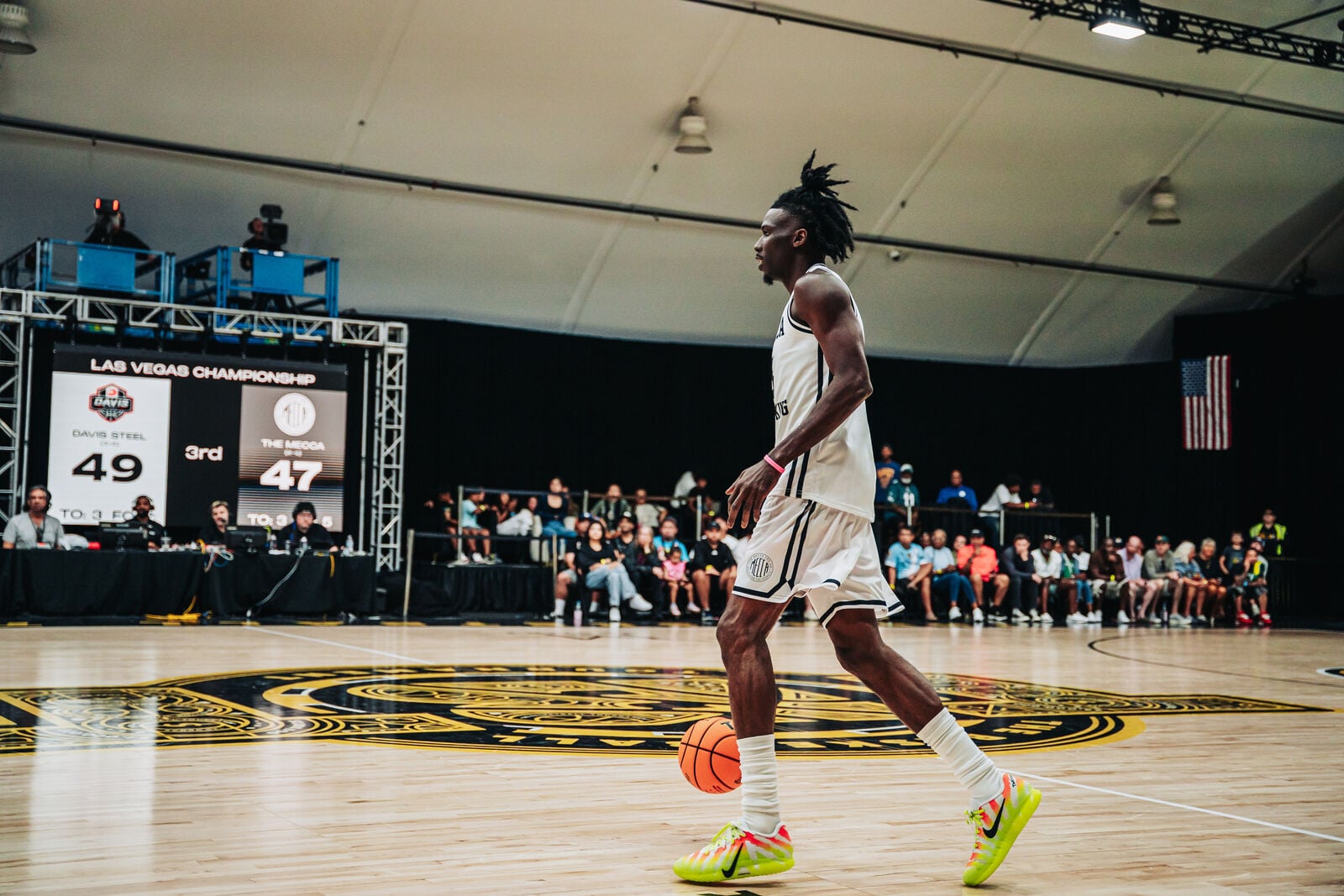 The Las Vegas championship game on a 5 ft by 10 ft LED board in a resort tent. Davis Steel won this bracket and went on to take the $2 million final in Lexington.
His verdict on the whole thing:
"Finding you guys was like a diamond in the rough. You guys were perfect, exactly what we needed."
Putting scores on a screen beside your own pitch, court or rink? Create a scoreboard, open it full-screen on the display, and run it from your phone.

Written by Caspar von Wrede
Founder of KeepTheScore. Building tools that help teams track scores and celebrate wins.