How Does Hockey Scoring Work? Goals, Assists & NHL Points
How goals, assists, and player points work in hockey. Covers goal-scoring rules, overtime rules, and the NHL team standings point system.
Article Contents
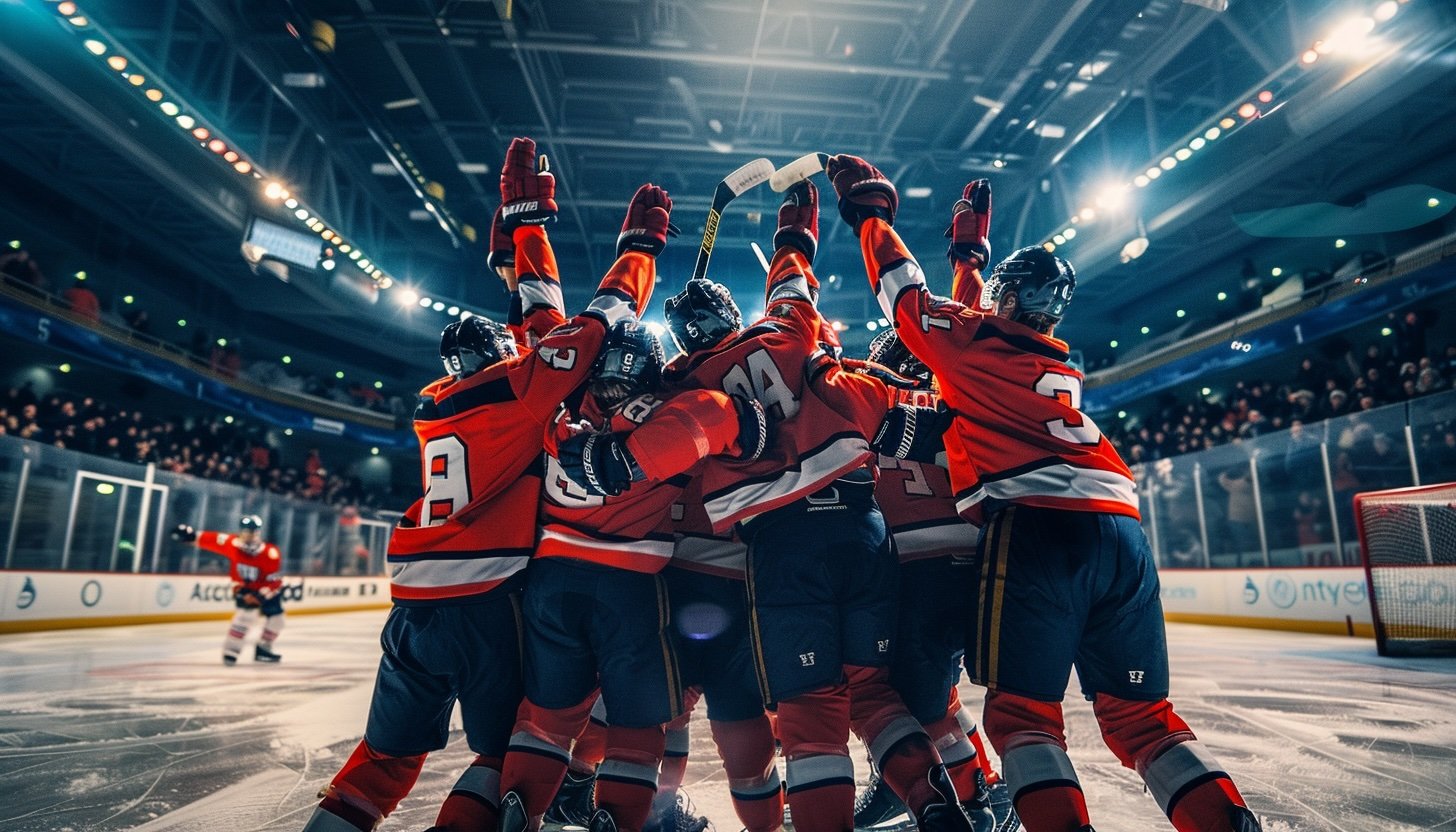
Hockey looks chaotic — bodies flying, pucks bouncing off the boards, line changes mid-shift. The scoring itself? Simple. Get the puck in the net to score a goal. Most goals wins. Compared to football or cricket it's almost embarrassingly easy to follow.
The fiddly bits are everything around the goal: what actually counts as a goal, how individual stats are tracked, and how the NHL awards standings points. That's what the rest of this is about.
How Goals Work
A goal counts when the whole puck crosses the goal line between the posts and under the crossbar. Wrist shot, deflection off a skate, rebound jammed in — doesn't matter. Cross the line legally and it's a goal.
Credit goes to whoever touched the puck last on the way in.
Rules That Make a Goal Count
The puck has to be fully over the line. Sitting on top doesn't count, and refs go to the overhead camera on close calls. Stick, skate, body — all fine. Hand or arm — not fine. You can't bat it in like a volleyball.
Goal Violations
Plenty of pucks cross the line and still don't count as a goal. The usual reasons a goal gets waved off:
- High stick. Puck hit with a stick above the crossbar before the goal goes in.
- Kicking motion. A skate deflection is fine; a deliberate kicking motion isn't, and the goal won't stand.
- Thrown puck. You can't throw a puck into the goal. Doesn't happen often, but it gets called when it does.
- Displaced net. If the cage gets knocked loose first, no goal — even if it would've been one.
- Offside. Attacker over the blue line ahead of the puck. Goal wiped, faceoff comes back.
- Goaltender interference. Crashing the goalie or stopping them from making a save. This is the call fans argue about — every week, every league.
- Hand pass. Deliberate hand-to-teammate pass in the offensive zone stops play. Any goal that follows is dead.
Player Points: Goals and Assists
This is where hockey throws newcomers off. "Points" in hockey aren't goals. Points are an individual stat that lumps goals and assists together.
One point for a goal, one point for an assist. A player with 30 goals and 50 assists has 80 points for the season. That's it.
Assists
Up to two players can pick up an assist on a single goal:
- Primary assist — the player who made the pass that led directly to the goal.
- Secondary assist — the player who passed to the primary assister.
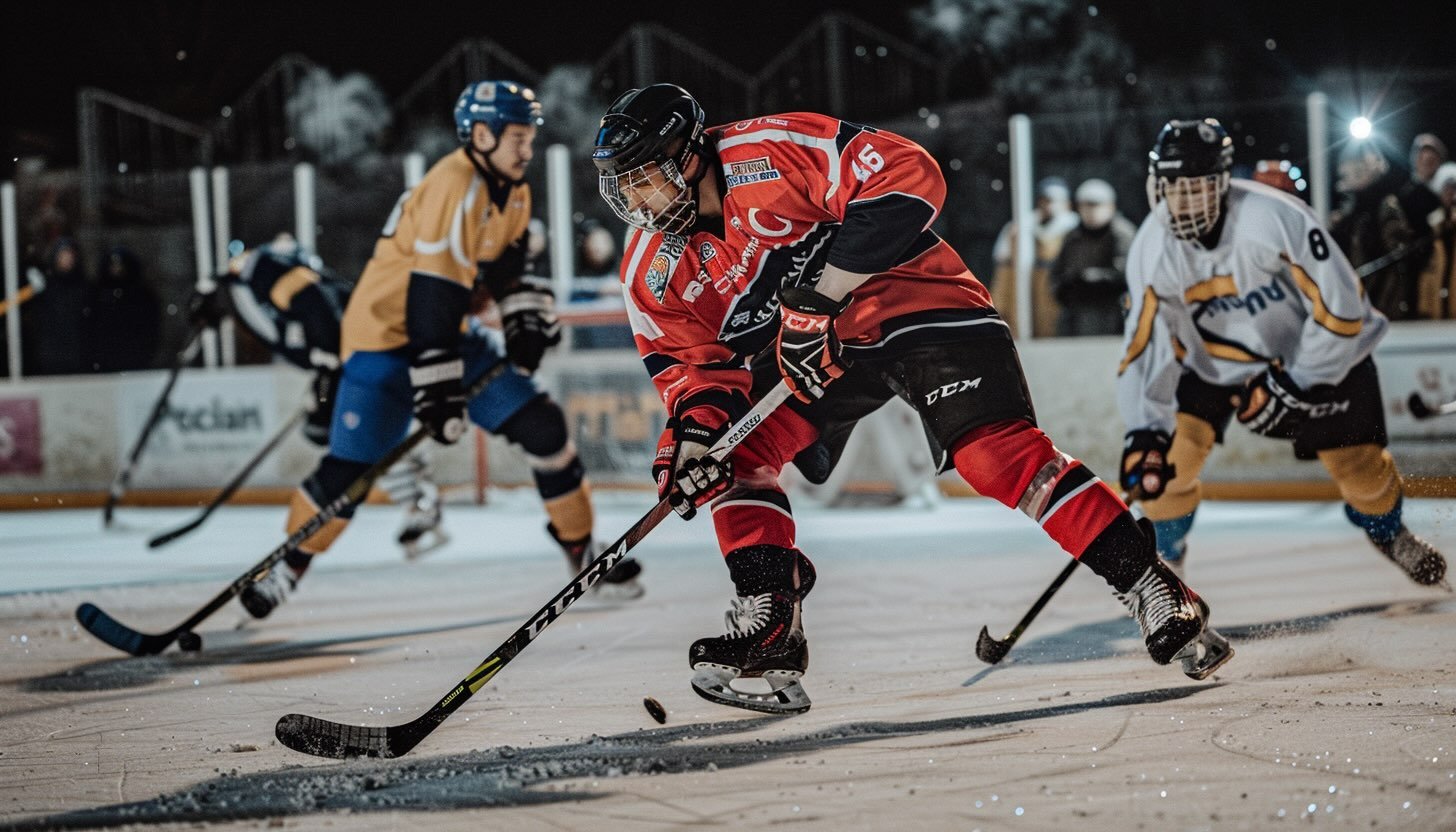
So three players (the scorer plus two assisters) can each earn a point on the same goal. That's typical. Sometimes there's only one assist, or none — a player who carries the puck end-to-end and scores gets an unassisted goal, and those are the ones the highlight reels love.
NHL Team Standings Points
Separate system. Player points are individual stats; NHL standings points decide which teams make the playoffs.
- Regulation win — 2 points
- Overtime or shootout win — 2 points
- Overtime or shootout loss — 1 point
- Regulation loss — 0 points
That overtime-loss point is divisive. Fans call it the loser point and argue it cushions bad teams. It also rewards anyone who keeps a tight game tight, which is the NHL's stated reason for keeping it in the standings. It's also why NHL standings rank teams by points percentage — points earned divided by points available — rather than plain wins-over-games.
Overtime and Shootouts
If regulation ends tied, the overtime format depends on whether you're in November or June.
Regular Season
Five-minute sudden death overtime, 3-on-3. The open ice in overtime is wild — odd-man rushes everywhere, goals come fast. Nobody scores in overtime? Shootout: three shooters per side, one-on-one against the goalie. Still tied after three rounds of the shootout, it keeps going one shooter at a time until someone wins.
Playoffs
No shootouts. Twenty-minute periods of 5-on-5 sudden-death overtime, repeating until someone scores. Playoff overtime is some of the best hockey there is. A few games have gone four overtimes.
What Community Hockey Scoring Actually Looks Like
Every "average hockey score" article online quotes NHL numbers. Fine if you're a Bruins fan, useless if you're trying to make sense of a youth tournament or a high school playoff. We host live scoreboards for thousands of those games every season, so we have data nobody else does — community hockey, not professional hockey.
Numbers below come from 2,974 completed hockey games scored on KeepTheScore — boards using the hockey scoreboard layout, marked final with realistic totals between 1 and 30 goals, and active enough that the operator was clearly running a real game. The slice covers active boards from mid-2024 through May 2026.
- Average final: 5.7–3.2, total 8.9 goals. Closer to 9 than the NHL's ~6. Community goalies don't stop pucks the way pros do, and the score reflects it.
- Median margin: 1 goal. Almost 57% of games are decided by one. One-goal hockey is the normal community game, not the exception. NHL playoff fans assume one-goal margins are rare drama; in the wild they're the median outcome.
- 20.6% of tied games go to a shootout. The NHL sees around 6%; we see triple that. Part of it is goaltending parity — high-school and youth keepers face fewer high-quality chances, so games drift to ties more often, and once they're there a shootout becomes a coin flip rather than the inevitability it is in the pros.
A couple of caveats. Some operators run two-period games (intramurals, drop-ins) while others run three; we don't split the slice. We also don't publish shots on goal — the field exists but most operators don't track it, so the data populates inconsistently. Penalties are stored as a list rather than a count, so we leave penalty rates out for the same reason.
If you broadcast or organize community hockey, the takeaway is that the rhythm of the game is nothing like what's on TV. Build your broadcast around tight margins and shootout-likely outcomes, not the NHL's blowout norms.
How Scoring Shows Up on the Scoreboard
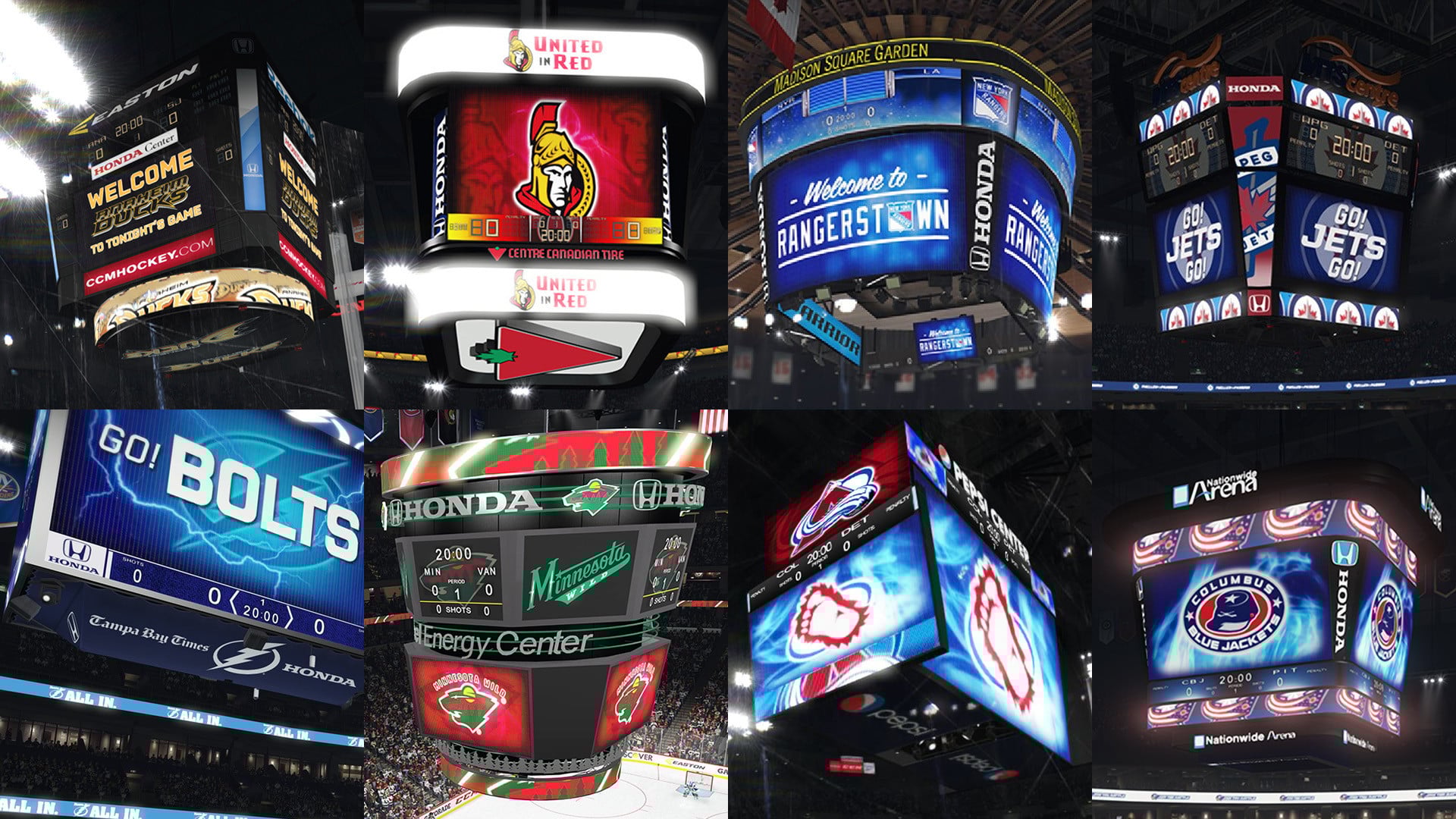
All those goals, assists, and penalty situations get tracked on the arena scoreboard and TV broadcasts in real time. If you want to understand what every number, clock, and indicator means during a hockey game, we wrote a whole guide on it: Hockey scoreboard explained.
Using Scoreboard Software
For rec leagues and local tournaments, software-based scoreboards are the practical alternative to expensive dedicated hardware. Pair a laptop or tablet with a TV or projector and you've got a professional-looking display for the price of a TV.
KeepTheScore has a dedicated hockey scoreboard that handles periods, score updates, and penalty timers — all controlled from a phone.
Pro Tip: Running a hockey league? Use Team Management to save team configurations (colors, logos, names) and reuse them instantly for future games.
Related Guides
- Hockey Scoreboard Explained — What every number, clock, and indicator means
- Softball Scoring — How runs work in softball
- Basketball Scoring — The 1-2-3 point system

Written by Caspar von Wrede
Founder of KeepTheScore. Building tools that help teams track scores and celebrate wins.