How does Football Scoring work?
A primer on how points are scored in American Football. Covers terms like touch-downs, field goals, quarters, down and distance.
Article Contents
Football scoring isn't complicated, but there are more ways to put points on the board than most people realize. Here's a breakdown of every scoring play — and what all those numbers on a scoreboard actually mean.

The scoring plays
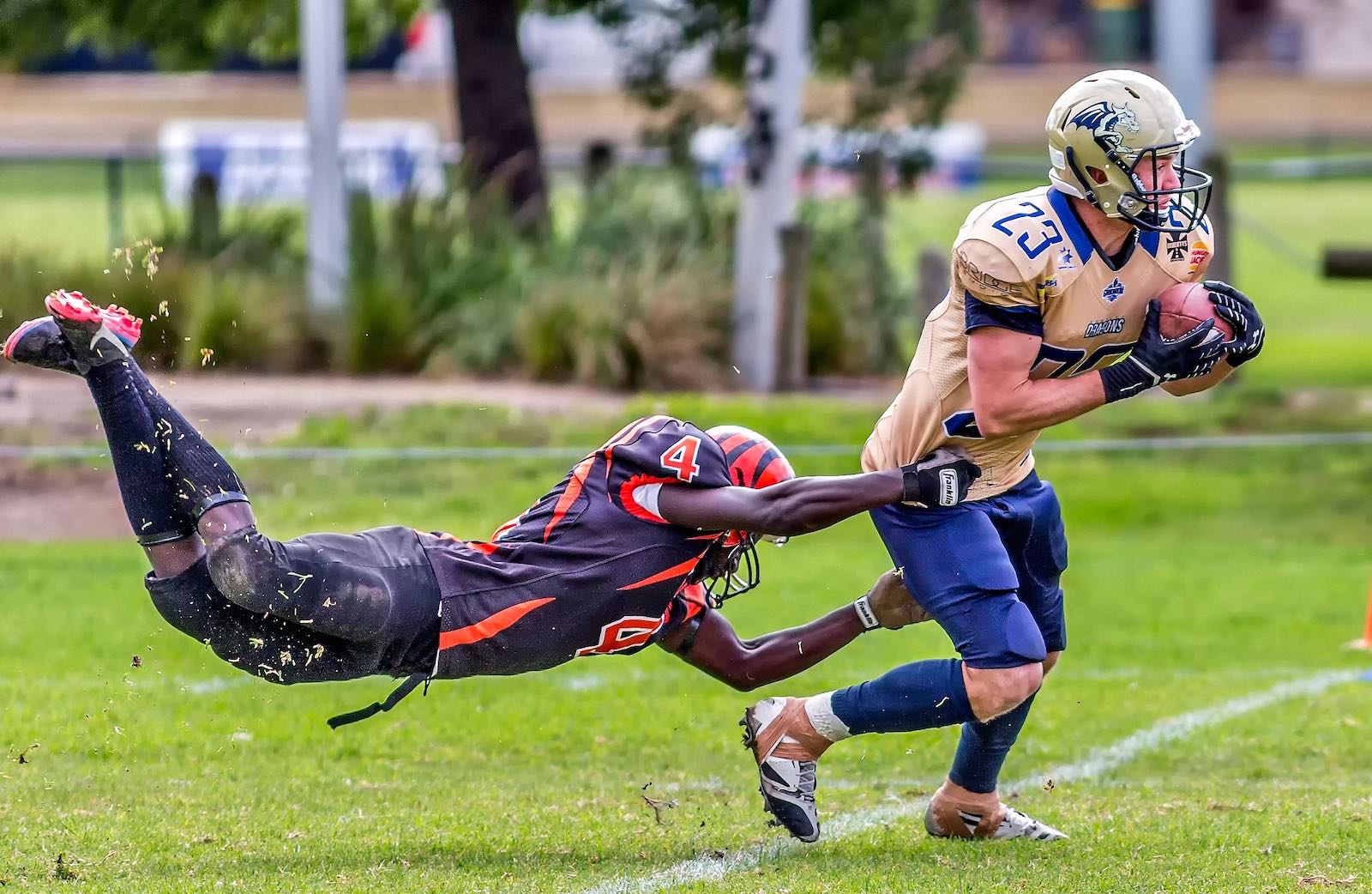
Touchdown (TD) — 6 points
A touchdown is the primary scoring play. It happens when a player carries the ball across the opposing goal line, or catches a pass in the end zone. Worth 6 points.
Extra Point (PAT) — 1 point
After a touchdown, the scoring team attempts an extra point (also called a PAT — point after touchdown). The kicker tries to send the ball through the goalposts from the 2-yard line. One additional point if successful.
Two-Point Conversion — 2 points
Instead of kicking, a team can run another play from the 2-yard line. Cross the goal line or catch a pass in the end zone and you get 2 points instead of 1. It's a gamble — worth it when you need a two-score swing late in the game.
Defensive Conversion Return — 2 points
During a PAT or two-point conversion attempt, the defense can score 2 points by intercepting the ball, recovering a fumble, or blocking the kick and returning it to the opposite end zone. Rare, but it counts — both in college and the NFL.
Field Goal (FG) — 3 points
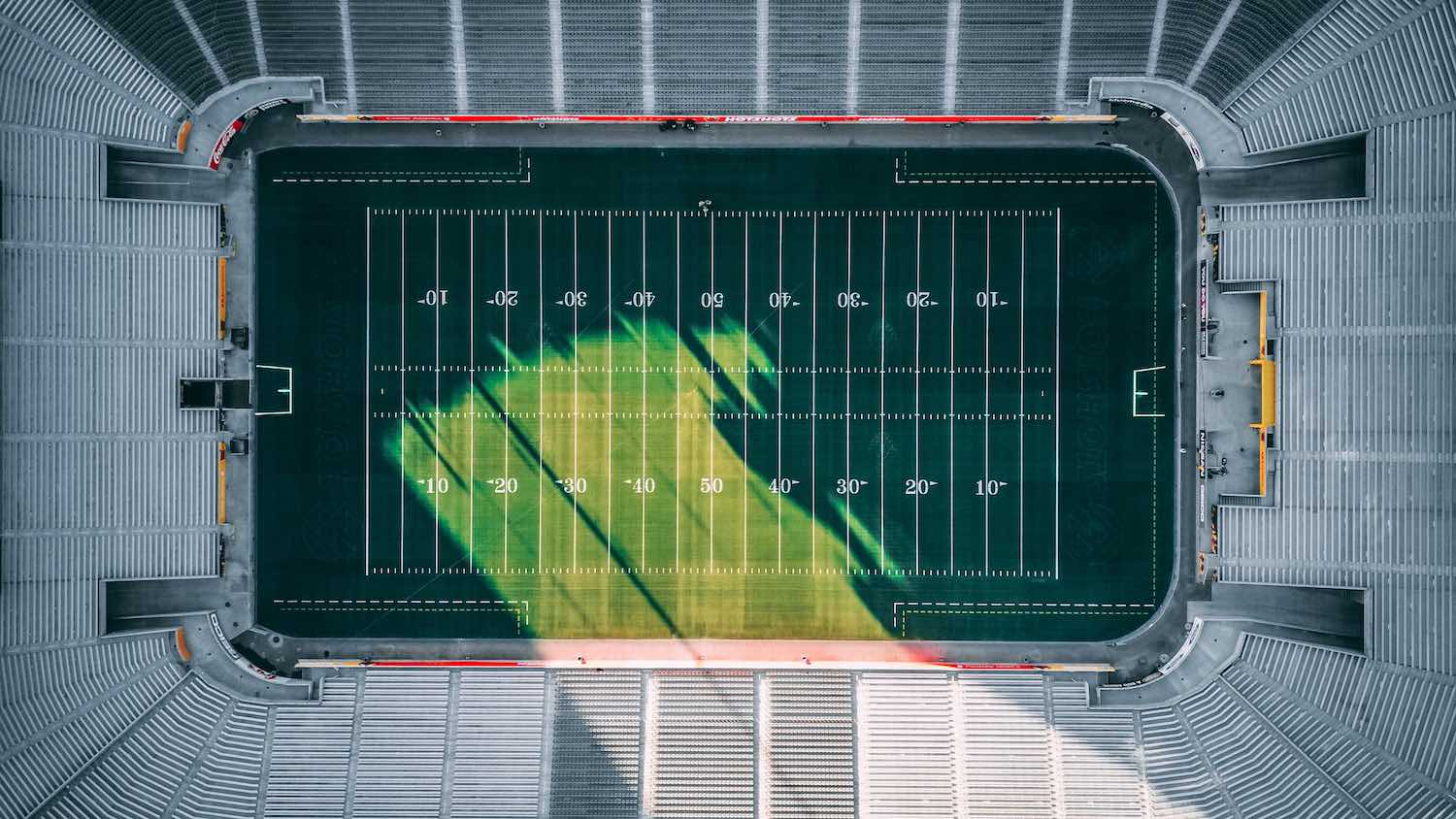
When a drive stalls short of the end zone, teams can attempt a field goal instead. The kicker tries to put the ball through the uprights from wherever the ball is spotted. A successful field goal is worth 3 points.
Safety — 2 points
A safety is the rarest scoring play. It happens when the defense tackles an offensive player in their own end zone, or the offense commits a penalty there. The defensive team gets 2 points — and the ball.
Understanding the scoreboard
Team names
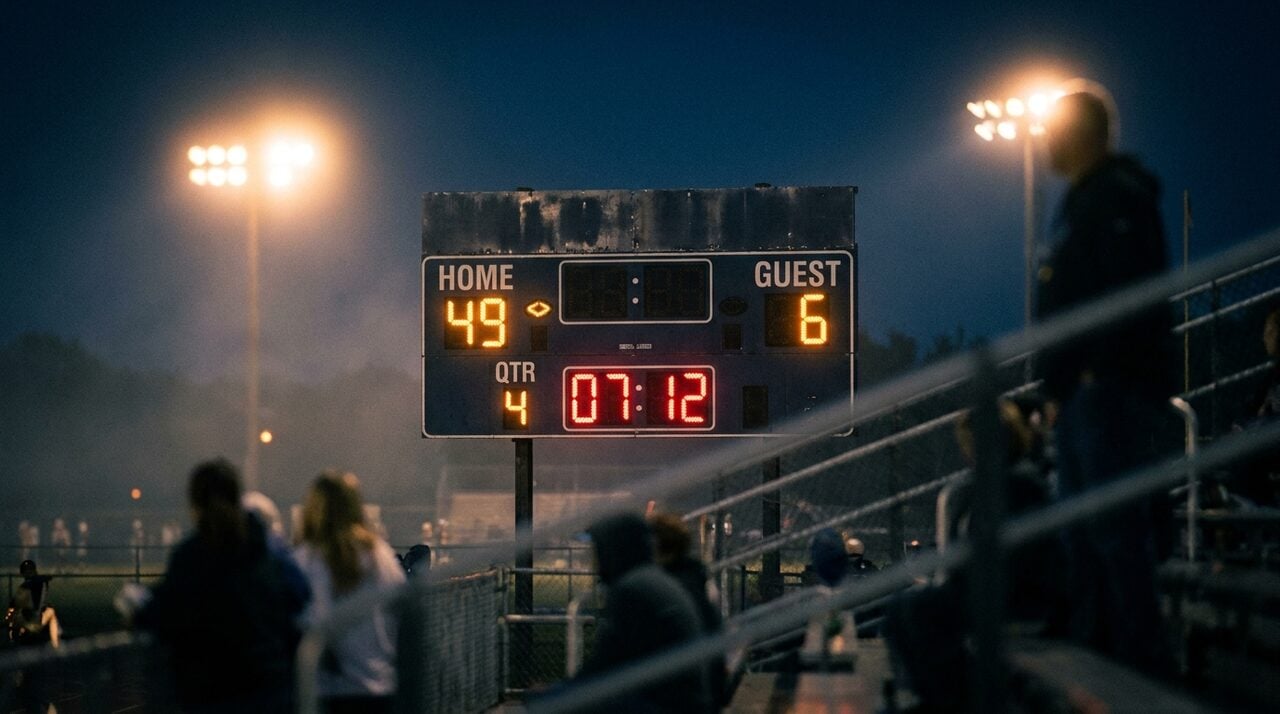
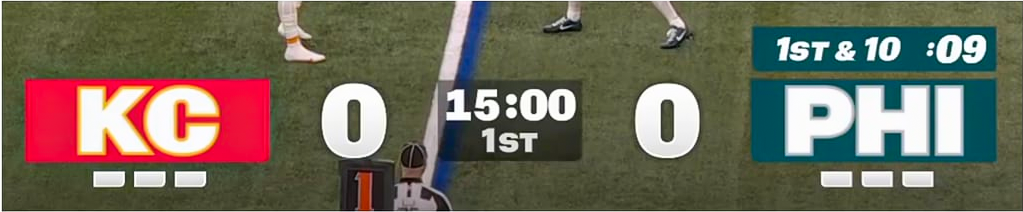
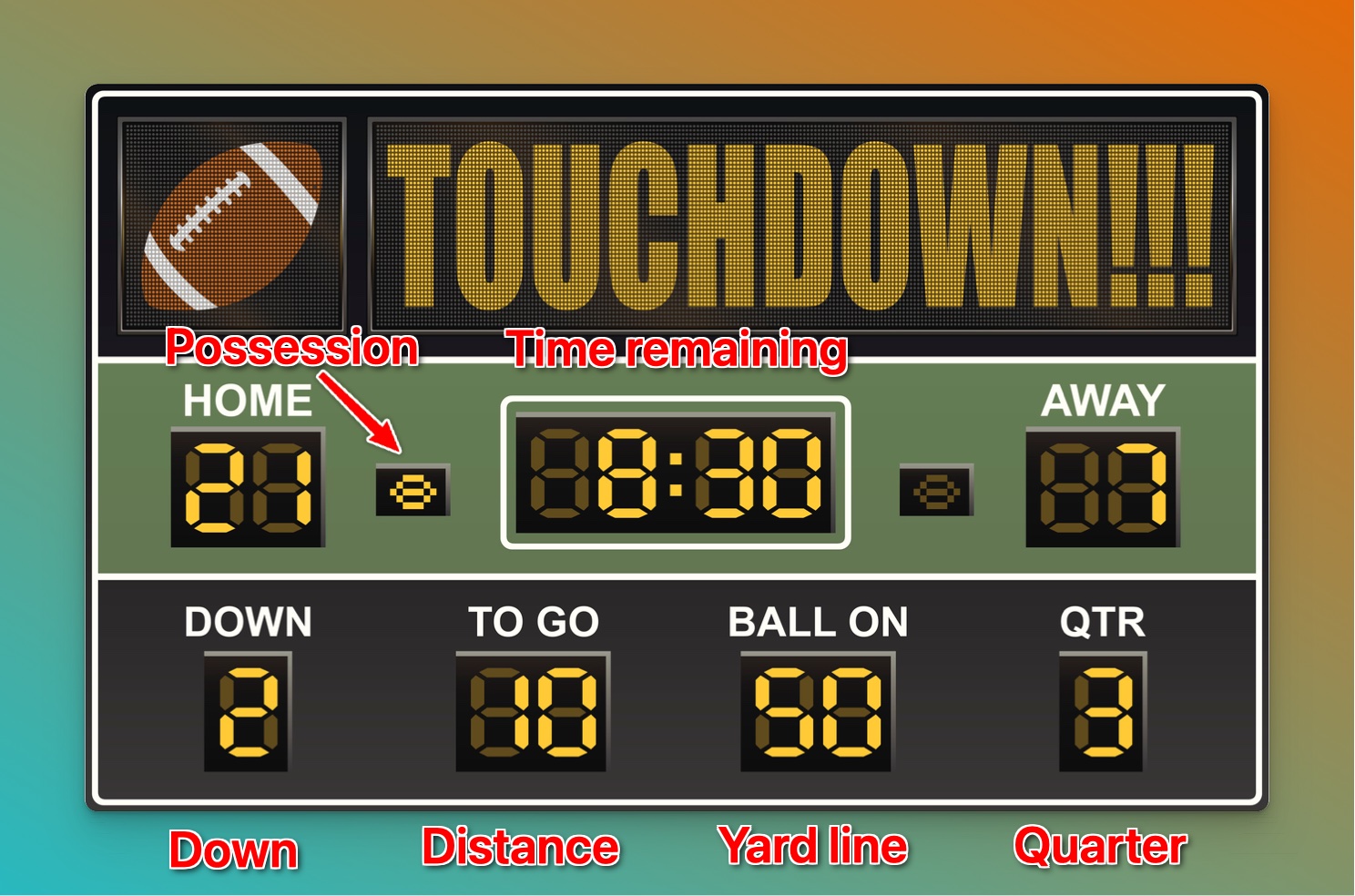
A football scoreboard shows the names or abbreviations of both teams. The home team is typically on top or to the left. Budget scoreboards just say "HOME" and "AWAY"; better ones show the actual team names.
Scores
Each team's current score sits next to their name and updates in real time as points are scored.
Quarter and time remaining
Football games run four quarters of 15 minutes each (in pro and college ball). The scoreboard shows which quarter you're in and how much time is left.
Down and distance
Football gives the offense four downs to advance 10 yards. The scoreboard shows the current down (1st through 4th) and the distance remaining — often labeled "TO GO".
If it shows 3rd & 8, the offense is on their third attempt and needs 8 more yards for a fresh set of downs. Gain those yards and the counter resets to 1st & 10. Fail, and on 4th down the team decides whether to punt, kick a field goal, or go for it.
Ball on
"Ball on" shows the yard line where the ball currently sits. The field runs from goal line to goal line with the 50-yard line at midfield. "Ball on 25" means the ball is on the 25-yard line — you need context to know whose side of the field that is.
Possession indicator
A small light or symbol next to a team name shows who has the ball. Useful for anyone who just tuned in or lost track of the action.
Timeouts remaining
Each team gets three timeouts per half. Some scoreboards track this; others don't.
What Community Football Scoring Actually Looks Like
NFL averages get cited everywhere. They're not a great proxy for what happens at the high school, youth, or flag-football level — and that's most of the football being played on any given weekend. We host scoreboards for thousands of those games, so we can describe community football without guessing.
Numbers below come from 4,256 completed football games scored on KeepTheScore — boards using the football scoreboard layout, marked final with a credible total between 1 and 200 points. Slice covers active boards through May 2026.
- Average final: 38–26, total 64 points. Roughly 40% higher than an NFL average game (~45 total). Some of that is high school offenses outrunning developing defenses; some is flag football and 8-man variants where rules favor offense. Community football scores more, full stop.
- Median margin: 6 points. Almost 58% of games end as one-score games. A one-score game is a margin of 8 or fewer (one touchdown plus a two-point conversion can erase it). Community football is closer than the high totals suggest, because the higher both teams score, the more often they trade scores.
- 19% of games end in a blowout (21+ points). Roughly one in five. Mismatched teams happen often at the rec and developing-program level; broadcasters should plan for the lopsided ones, not just the close ones. Push the threshold up to 35 and you're into mercy-rule territory — see the football mercy rule, state by state for what your state does to the clock at that point.
A caveat. We don't split tackle vs flag vs 8-man in the dataset, and that matters — flag-football leagues score significantly higher than tackle, and the average above blends them. If you only watch full-pads high-school games, you'll see lower totals than 64; if you're broadcasting flag, you'll see higher.
For anyone running a community-football scoreboard: don't anchor your audience's expectations to the NFL. Higher totals, similar one-score frequency, and a real rate of blowouts is the pattern.
Using scoreboard software
Keepthescore.com has a dedicated football scoreboard — you can be up and running in under 30 seconds. Browse our football scoreboard templates to find a pre-made design that fits your game.
It's a solid option for small leagues and teams that can't justify the cost of a dedicated hardware scoreboard.
Streaming your football game?
If you're planning to live stream, check out our guide on how to add a football scoreboard overlay to OBS. It shows you how to create a professional-looking scoreboard that updates in real time on your stream.
Pro Tip: Running a football league or streaming multiple games? Use Team Management to save team configurations (colors, logos, names) and reuse them instantly for future games.
Do you have feedback or questions? Please do comment below!

Written by Caspar von Wrede
Founder of KeepTheScore. Building tools that help teams track scores and celebrate wins.