How does futsal scoring work?
Learn about futsal scoring rules, match format, and what makes this fast-paced indoor game different from outdoor soccer.
Article Contents
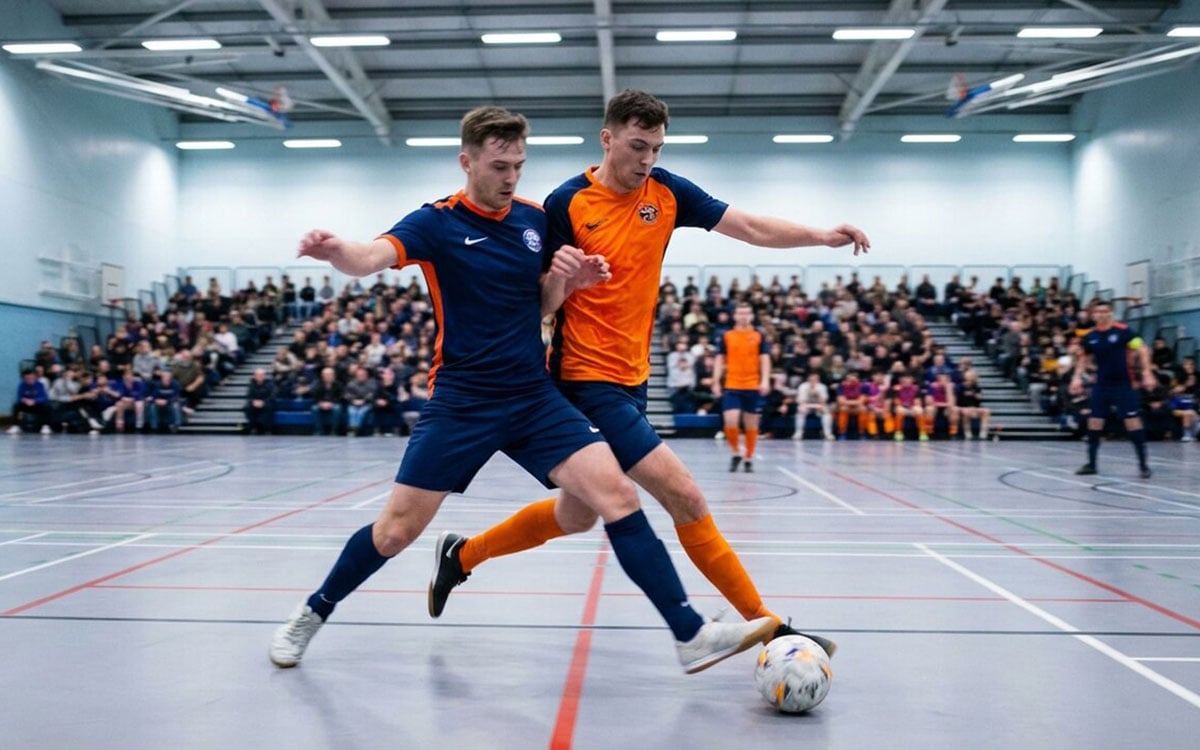
Five players a side, a heavier ball that barely bounces, and goals that come in bunches — futsal doesn't play like outdoor soccer, and the scoreboard shouldn't either. A team can commit five fouls in a half without much consequence, then get punished hard for the sixth. There's no offside trap to spring. And a possession indicator earns its spot on the display, because in a game this fast, knowing who has the ball tells you as much as the score does.
Here's what's actually different about keeping score in futsal.
How the Match Is Structured
Two teams of five — four outfield players plus a goalkeeper — play on a hard court roughly the size of a basketball court. The ball is smaller than an outdoor soccer ball and weighted to kill the bounce, which keeps it on the ground and rewards close control instead of long balls.
The match runs in two 20-minute halves, and the clock stops for every dead ball — fouls, kick-ins, goal clearances. That's a real difference from outdoor soccer's running clock, and it's why a 20-minute half rarely takes 20 minutes to play out. Add a 15-minute half-time break and one one-minute timeout per team per half, and a tight match stretches well past an hour. If the score's level after regulation, the competition decides whether it's extra time or straight to penalties.
A few rules trip up anyone coming from outdoor soccer:
- No offside. Players can camp anywhere on the court.
- Kick-ins, not throw-ins — and they're taken with the feet, not the hands.
- A 4-second clock on restarts — kick-ins, goal clearances, corners, and free kicks all have to happen inside 4 seconds or the ball turns over.
- Flying substitutions. Swap players as often as you want through a substitution zone, no stoppage required — closer to hockey line changes than soccer's limited subs.
Scoring Is Simple. Fouls Are Not.
A goal is a goal: the whole ball crosses the line, between the posts, under the bar, one point. The goalkeeper can score from anywhere on the court, own half included. Own goals count for the other team, same as everywhere else. What's different is how often it happens — five-a-side on a court a fraction the size of a soccer pitch means matches routinely land in the 4-12 goal range. A 1-0 result is the exception, not the norm.
The part that actually decides tight games is fouls, not goals. Futsal counts team fouls per half, not per player, and the count resets at half-time. The first five a team commits are just fouls — free kick, play resumes, nothing else happens. The sixth is where it gets expensive: every foul from the sixth onward hands the opposing team a direct free kick from the second penalty mark, 10 meters out, with no defensive wall allowed. That's close to a free goal against a team that's fouled its way into trouble, and it's the rule newcomers forget right up until it costs them a match. FIFA's Futsal Laws of the Game cover the full mechanics.
Fouls inside the penalty area are simpler: straight penalty kick, taken from the 6-meter mark — noticeably closer than outdoor soccer's 12-yard spot, which is part of why futsal penalties feel almost unstoppable.
What a Futsal Scoreboard Needs to Show
At minimum, a scoreboard needs to track:
- Team names and the running score
- Which half you're in
- A 20-minute countdown that actually stops for dead balls — a clock that just counts up like a stopwatch drifts out of sync with the real game within minutes
- Possession, since with no offside and constant transitions, "who has the ball" is often more telling than the score
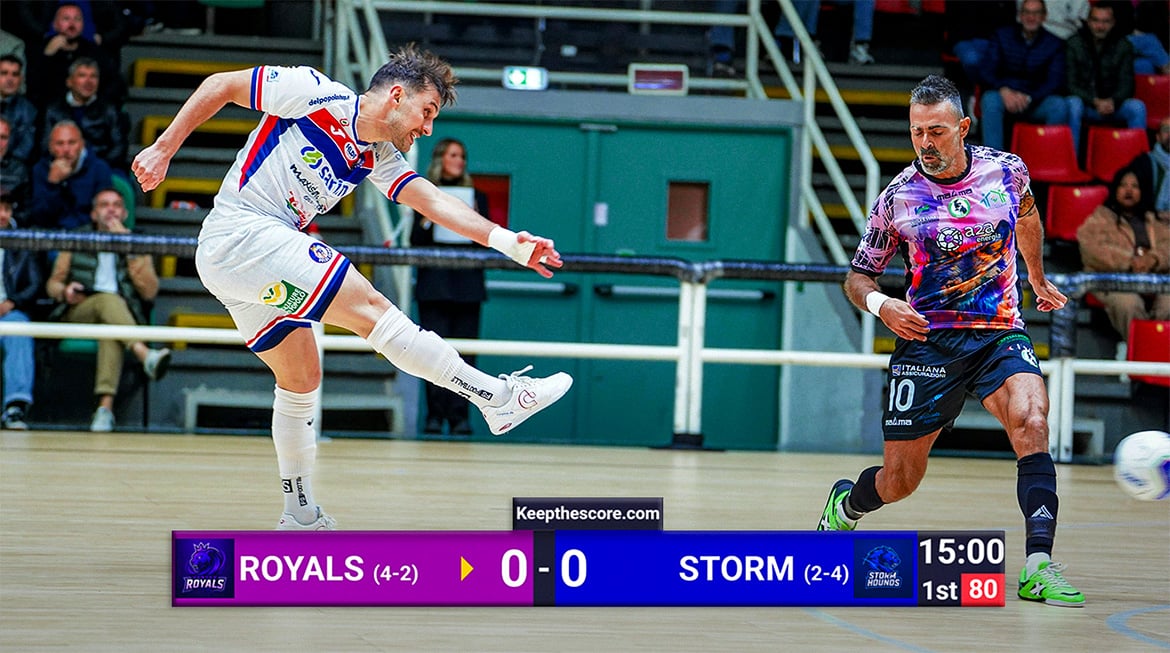
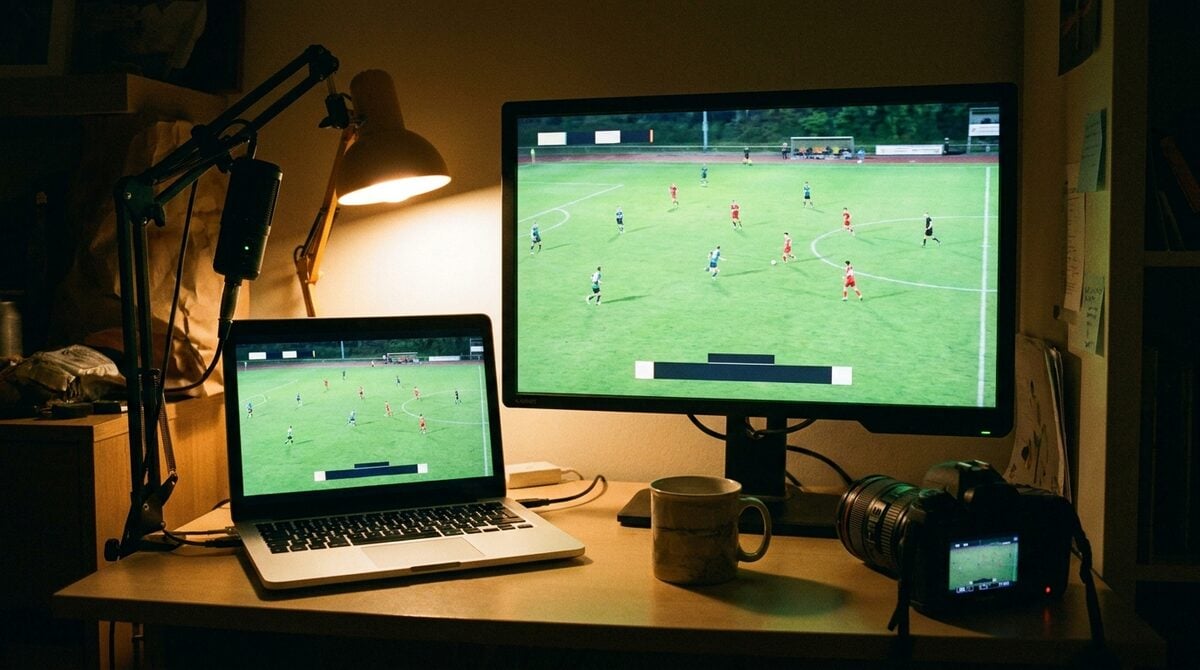
KeepTheScore's futsal scoreboard handles the stop-start clock, accumulated fouls, and possession in one place, and it runs on whatever screen you've already got — a tablet propped on the scorer's table, a TV mounted courtside, or a laptop feeding an OBS overlay for a livestream. Update it from your phone from anywhere in the gym.
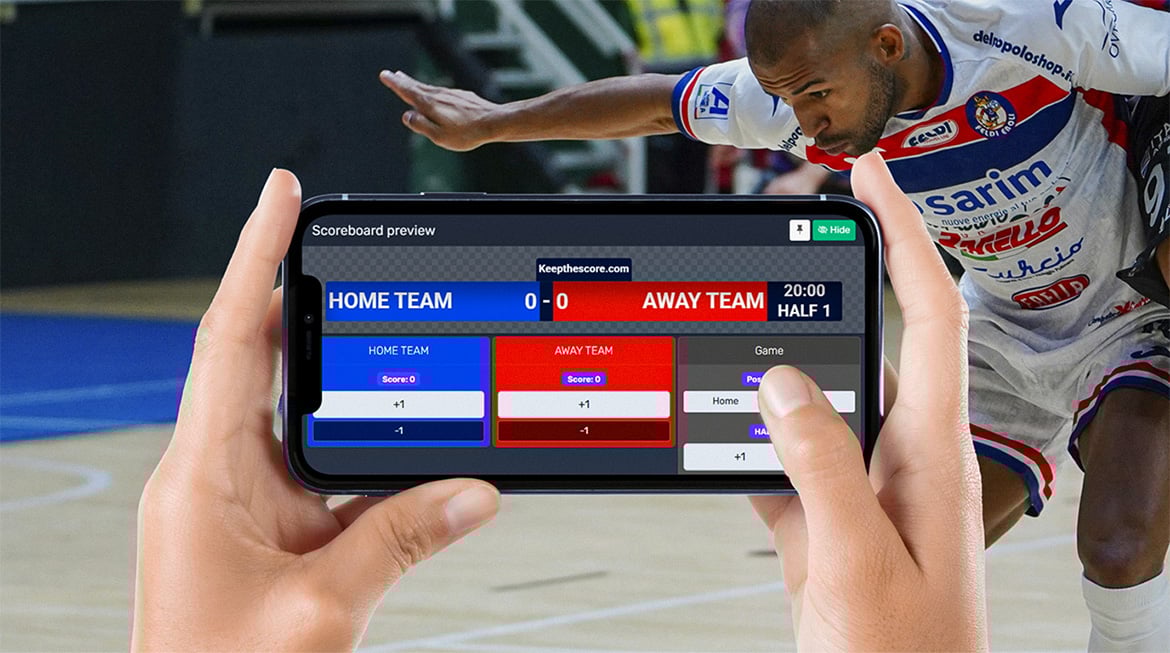
Nearly 950 futsal scoreboards have been set up on KeepTheScore so far — a small niche next to outdoor soccer, but a real one.
Scorekeeping Tips Worth Knowing Before Kickoff
Track accumulated fouls from the opening whistle, not from foul number four — it's the easiest count to lose, and the team that gets caught out is always the one arguing at foul number seven that it should still be a normal free kick. Reset the count the moment the second half starts, because first-half fouls don't carry over.
If you're streaming, run the board as a browser source in OBS or Streamlabs instead of a second screen — the countdown timer stays in sync across every connected device, so what your viewers see matches what's happening on court instead of trailing a few seconds behind.

Written by Caspar von Wrede
Founder of KeepTheScore. Building tools that help teams track scores and celebrate wins.