Walk into any ballpark and you'll see it: rows of numbers marching across a board, team names stacked vertically, mysterious letters like R-H-E. The final score is obvious. But what do all those other columns mean? And why does the scoreboard sometimes show an "X" instead of a number?
Baseball scoreboards have evolved from hand-operated boards to massive LED displays, but they all communicate the same essential information. This guide breaks down what you're looking at—from little league fields to major league stadiums.
The Line Score: Reading Left to Right
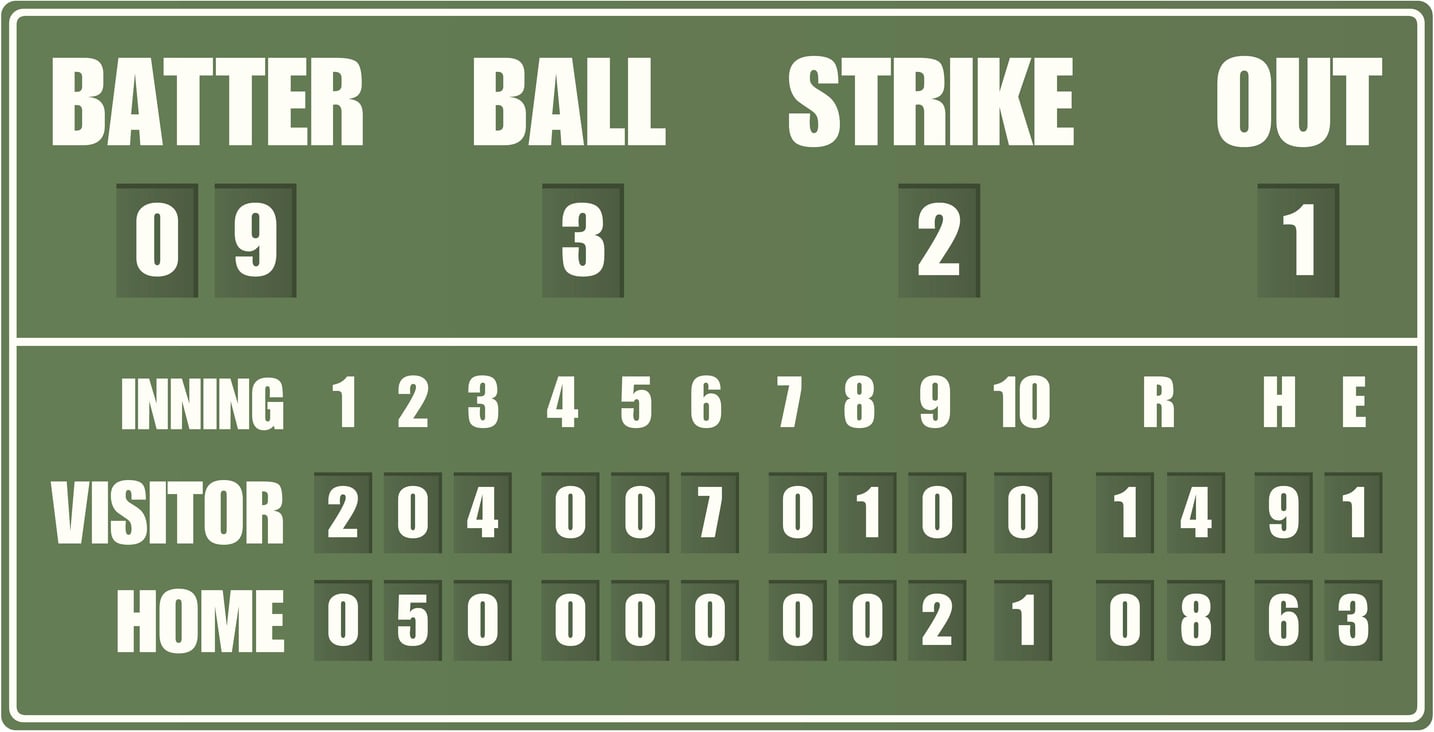
The heart of any baseball scoreboard is the line score—a grid showing runs scored in each inning.
Here's what a typical line score looks like:
| 1 | 2 | 3 | 4 | 5 | 6 | 7 | 8 | 9 | R | H | E | |
|---|---|---|---|---|---|---|---|---|---|---|---|---|
| Yankees | 0 | 1 | 0 | 2 | 0 | 0 | 1 | 0 | 3 | 7 | 12 | 1 |
| Red Sox | 2 | 0 | 0 | 0 | 1 | 0 | 0 | 2 | X | 5 | 9 | 0 |
Reading this scoreboard: - Columns 1-9: Runs scored in each inning - R: Total runs (the actual score) - H: Total hits - E: Errors committed
The visiting team always appears on top. That's tradition going back over a century.
What Does That "X" Mean?
Notice the "X" in the 9th inning for the Red Sox? That means the bottom of the ninth wasn't played. The home team was already losing, so there was no need—they couldn't win anyway.
You'll also see an X when the home team wins in the bottom of the 9th (or any extra inning). Once they take the lead, the game's over. No need to finish the inning.
R-H-E: The Three Letters Every Fan Should Know
Those three letters summarize the game at a glance:
R = Runs
This is the score. The team with more runs wins. Simple.
Unlike basketball or football, baseball runs accumulate slowly. A 3-2 game is considered normal. Double digits? That's a blowout.
H = Hits
Total successful hits by the team—singles, doubles, triples, and home runs all count as one hit.
Why track hits? They tell you how the game actually played out. A team might score 5 runs on just 3 hits (walks, errors, lucky bounces). Or they might get 12 hits and only score 2 runs (stranded runners everywhere). The hits column adds context.
E = Errors
Fielding mistakes that let runners advance or reach base when they should've been out.
Errors matter for pitching statistics. If a run scores because of an error, it's an "unearned run" and doesn't count against the pitcher's ERA. That's why scoreboards track them.
The Current Game Situation
Modern scoreboards don't just show history—they show what's happening right now.
Balls, Strikes, and Outs
Most scoreboards display the current count:
- B: Balls (0-3)
- S: Strikes (0-2)
- O: Outs (0-2)
Four balls? The batter walks. Three strikes? They're out. Three outs? Side retired, teams switch.
Some older boards use lights—one light per ball, strike, or out. Digital boards usually show numbers.
Base Runners
Look for illuminated diamonds or circles showing which bases have runners:
- First base occupied: Runner at first
- Second base occupied: Runner in scoring position
- Third base occupied: Runner 90 feet from home
- Bases loaded: Runners everywhere, pressure everywhere
This tells you the scoring potential of the current at-bat. Bases loaded with nobody out? Anything could happen.
The Inning Indicator
Usually shown as a number (1-9 or higher for extra innings) with an arrow or half-circle indicating: - Top of inning (arrow up, or top half filled): Visitors batting - Bottom of inning (arrow down, or bottom half filled): Home team batting
Stadium Scoreboards vs. TV Broadcasts
What you see depends on where you're watching.
At the Ballpark
Stadium scoreboards range from classic to cutting-edge:
Manual scoreboards (like Wrigley Field's outfield board) use workers hanging numbered plates. They show basic line scores and out-of-town games. There's something romantic about watching someone climb inside a wall to change a number.
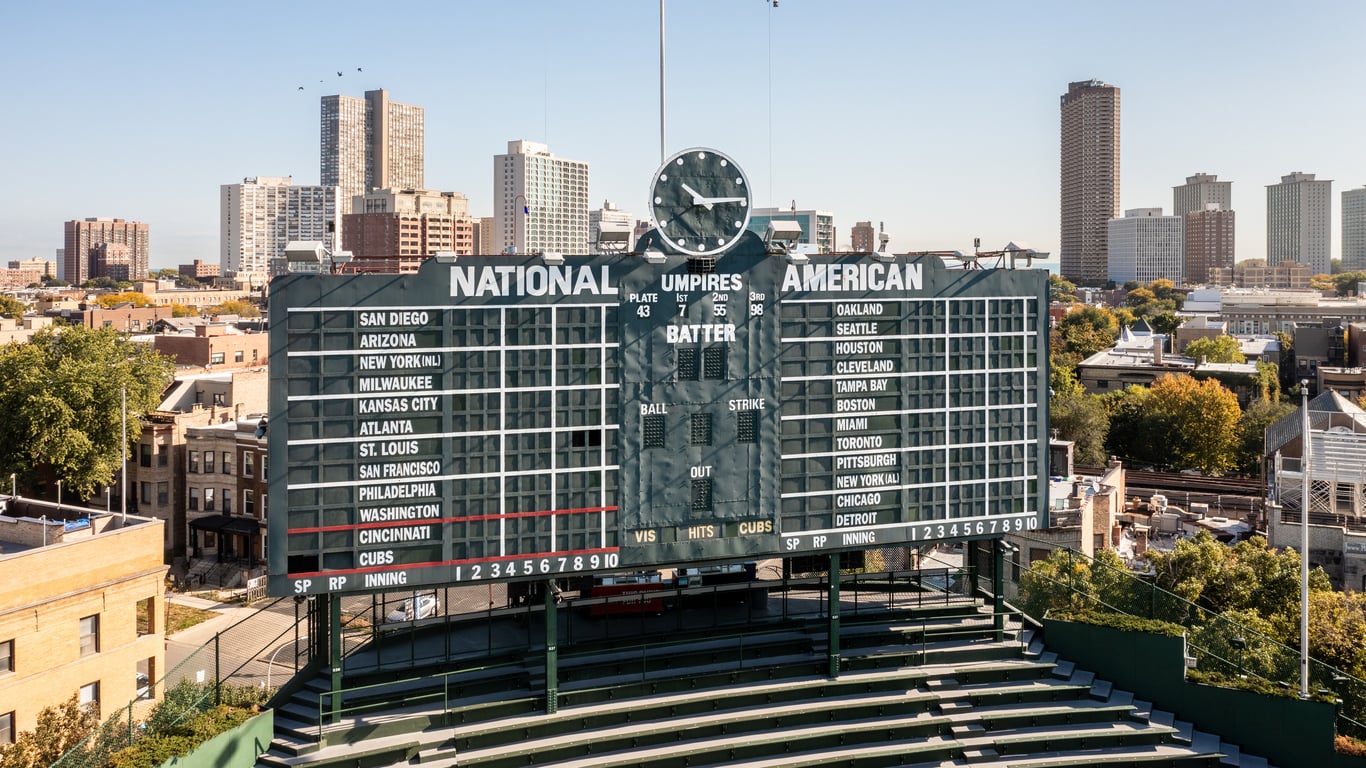 The manual scoreboard at Wrigley Field—one of the last of its kind in Major League Baseball
LED scoreboards show everything—line scores, pitch speed, batter stats, replays, advertisements. Modern parks often have multiple boards: a main video board plus auxiliary displays down the lines.
On TV
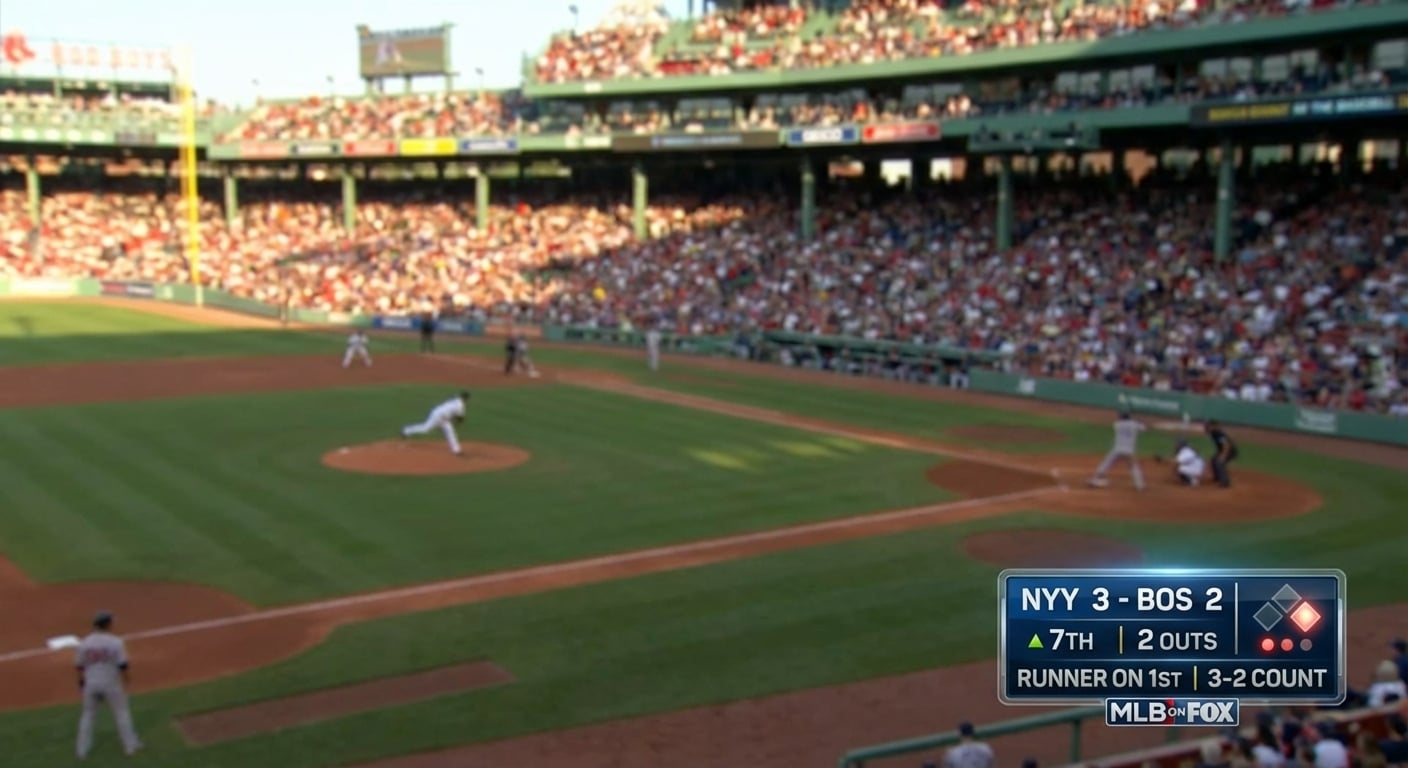 A typical TV broadcast scoreboard overlay during a baseball game
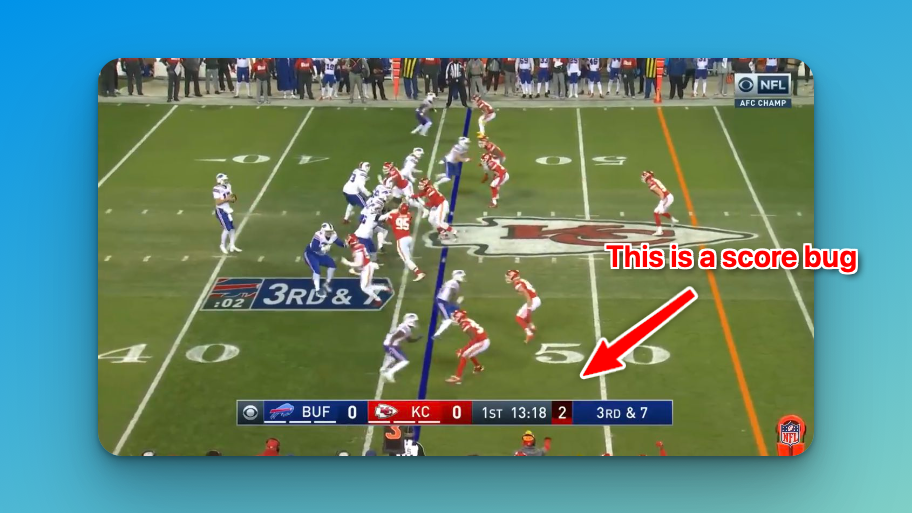
Broadcast graphics (called "score bugs") typically show: - Current score - Inning and half - Count (balls-strikes-outs) - Base runners - Batter/pitcher names and key stats
The full line score usually appears between innings or on demand. TV directors know casual viewers mainly care about: who's winning, what's the count, and are there runners on.
Reading Between the Lines
The numbers tell stories if you know how to look:
Lots of zeros early, then a big inning? One team broke through against the opposing starter.
High hit count but low runs? Stranded runners. Frustrating day at the plate.
Errors piling up? Sloppy fielding. Pitchers getting unlucky. Maybe it's a windy day.
Game going to extra innings? Watch the line score extend: 10, 11, 12... some games have gone 18 innings or more.
Extra Innings and Tiebreakers
Regular season games can't end in ties. If the score is even after 9 innings, play continues.
Since 2020, MLB has used a rule placing a runner on second base to start each extra inning, speeding up resolution. The scoreboard just keeps adding columns—10th, 11th, however long it takes.
Postseason games don't use the runner-on-second rule. They play traditional extra innings until someone wins.
Running Your Own Scoreboard
Need a scoreboard for your league? KeepTheScore's baseball scoreboard handles everything—runs by inning, R-H-E tracking, count display. Works on any device.
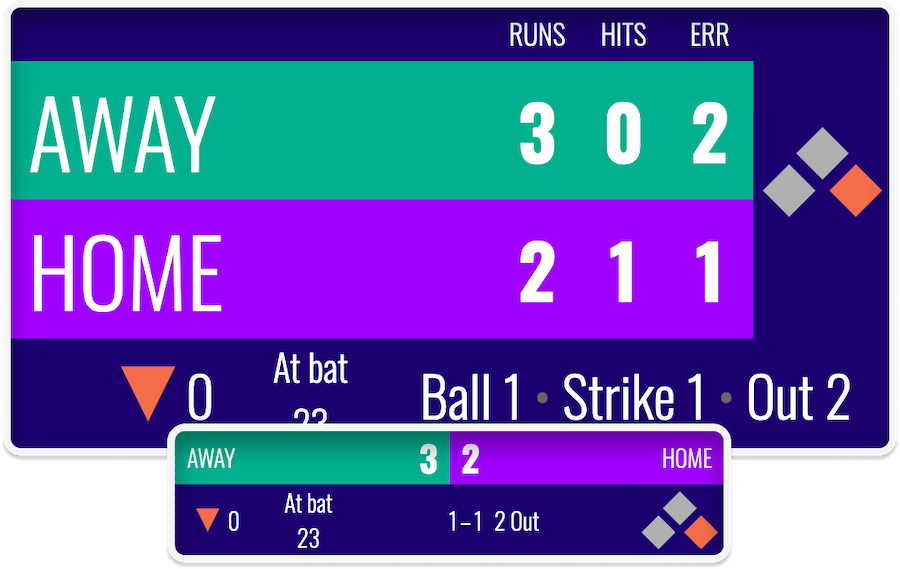 A baseball scoreboard from KeepTheScore showing two different layout options
Streaming games? You can add a scoreboard overlay to your broadcast, just like the professionals use.
Quick Setup Tips
- Pre-game: Enter team names, set the number of innings
- Each half-inning: Update runs scored before switching sides
- After the game: Screenshot or export the final line score
Once you understand the layout, baseball scoreboards become a story unfolding in numbers. Every column is an inning of drama. Every row of R-H-E is a team's performance compressed into three digits.
Now you know what you're looking at.
Related: How baseball scoring works — the complete guide to runs, hits, and home runs.